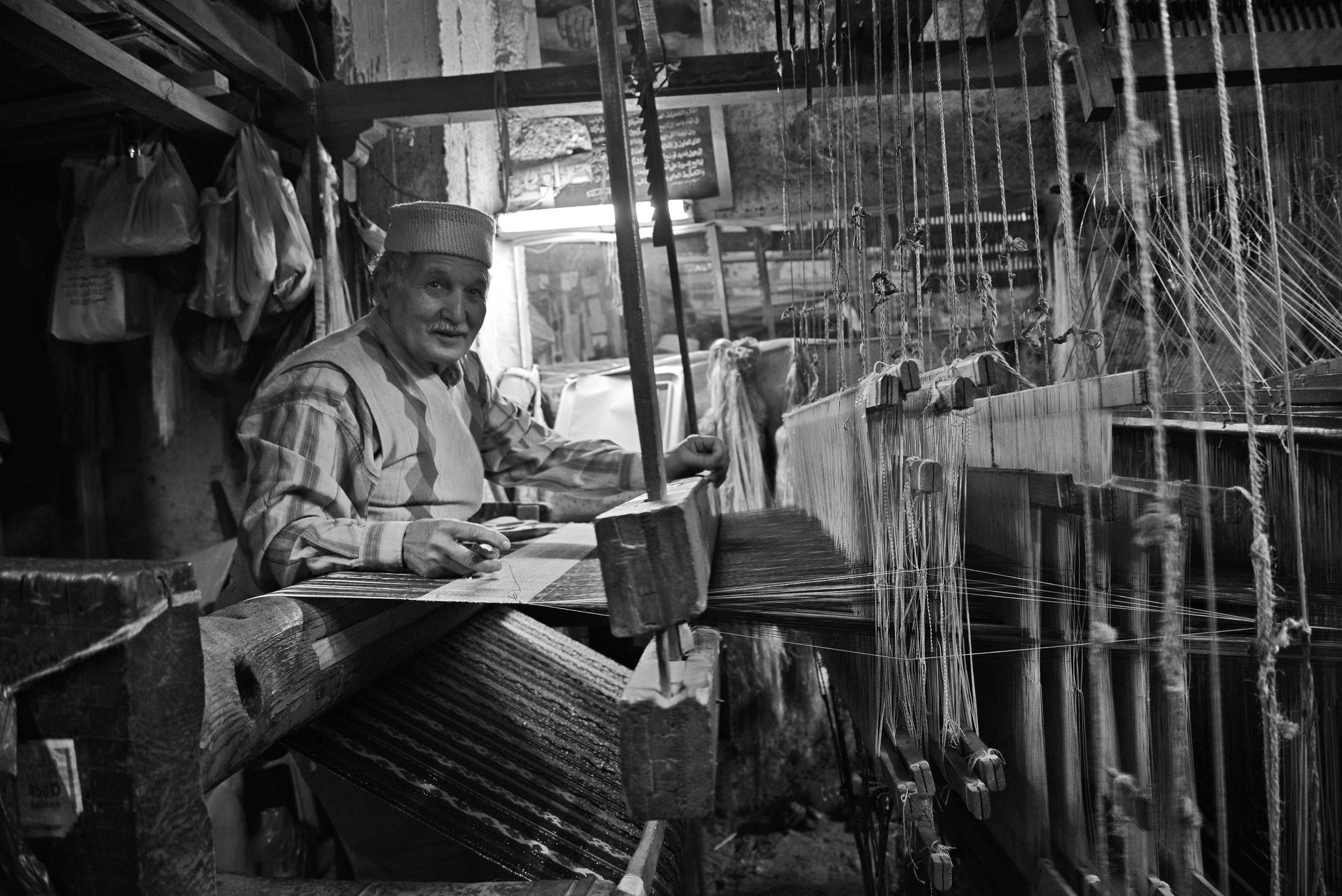
Dressing in African style without understanding its underlying garment logic is like attempting couture without knowing a dart from a seam. The results might gesture toward something recognizable, but they'll lack the structural intention that makes the real thing work. Across a continent of 54 countries and extraordinary textile diversity, certain construction principles, silhouette families, and draping systems recur with enough coherence that a trained eye can learn to read them — and then deploy them deliberately. This guide cuts to that garment vocabulary.
Why Garment Construction Is the Starting Point
Most conversations about African dress begin and end with print. That's understandable — the visual impact of Ankara & prints is immediate — but fabric choice is the surface layer. Underneath it, African garments operate through a distinct set of construction philosophies that differ meaningfully from the body-mapping, seam-intensive logic of Western tailoring. The dominant mode is not about fitting the body through cutting; it's about relating the cloth to the body through proportion, volume, and controlled drape. Understanding that distinction changes how you approach every piece.
The Major Silhouette Families
The Unsewn and Minimally Sewn Wrap
Across Sub-Saharan Africa, one of the oldest silhouette systems involves lengths of cloth worn without stitching — or with only minimal construction — and held in place by tucking, knotting, or the physics of wrapped tension. The Ghanaian kente cloth, in its traditional ceremonial form, is worn as a toga-like wrap over one shoulder, with the arrangement of the cloth communicating social and ceremonial meaning through how much of the body it covers and which shoulder bears the weight. The Maasai shuka operates similarly — a rectangular length of fabric, typically plaid, wrapped and pinned rather than sewn into a garment shape.
As an Amazon Associate, I earn from qualifying purchases.
The design principle here is that the garment exists in relationship to the wearer's movement. It is never static. When you work with these forms, the critical variables are fabric weight (too light and it won't hold tension; too stiff and it won't drape), length relative to height, and the anchor point — shoulder, waist, or hip — that determines the entire visual line of the look.
💼 Career Opportunities
The T-Silhouette: The Boubou and Its Relatives
The boubou (also called bubu or grand boubou) is a wide, flowing overgarment worn across West and Central Africa, distinguished by its T-shaped cut and the absence of side seams below the armhole, which allows a single piece of fabric to drape over the body without fitting the torso. This is a foundational garment to understand because its construction logic inverts Western tailoring assumptions entirely. Where a blazer or a fitted dress uses seaming to map cloth onto body contours, the boubou achieves its effect by refusing that mapping. The excess fabric — and there is substantial excess — falls in controlled pools of volume at the sides and front.
The styling consequence of this is significant: the boubou's visual success depends almost entirely on fabric behavior and embroidery placement, not on fit in any conventional sense. The grandeur of the grand boubou is inseparable from its weight and the way that weight creates the characteristic drape at the hem. In Senegal and Mali, where the grand boubou is most elaborately developed, the neck and chest embroidery — often dense geometric or floral machine or hand embroidery — functions as the visual anchor that prevents the expanse of fabric from reading as shapeless.
Shorter relatives of the boubou — the dashiki being the most widely recognized — share the same T-cut logic but truncate it at hip or thigh length, producing a garment that reads more as a tunic than an overgarment. The dashiki's neck embroidery or appliqué panel serves the same anchoring function as full boubou embroidery.
As an Amazon Associate, we earn from qualifying purchases.
The Wrapped Skirt Systems: Kanga, Kitenge, and Lappa
Across East, Central, and West Africa, rectangular cloth panels function as wrapped skirts, sarongs, and multipurpose cover garments. The Swahili-coast kanga is a cotton rectangle printed in pairs with a border design and a central text proverb — each kanga is designed to be cut in two and used as a coordinated pairing. One length wraps the lower body; the other may cover the upper body, be tied as a headwrap, or used as a baby carrier. The coordinated-pair logic is structurally important: the border design is engineered to frame the body when the cloth is wrapped, meaning you cannot use kanga fabric arbitrarily — the print placement has a built-in orientation.
Kitenge (known as kanga's heavier relative, closer to Ankara cloth in weight and finish) is used throughout Central and East Africa as both a wrapped skirt and as tailored garment fabric. When a kitenge is worn as a wrap, the tuck-and-fold at the waist is the defining technical moment: a deep fold at the waistband creates a false waistband that holds the tension of the wrap, and the excess length at the hem determines the silhouette — straight and narrow when the wrap is tight, A-line when the wrap is looser with pleating at the hip.
The Fitted and Tailored Forms: Iro and Buba, Kaba, and Beyond
Not all African garment construction avoids body fitting. West African women's dress traditions — particularly the Yoruba iro and buba combination — involve actual tailoring, though with a different set of priorities than Western fashion. The buba is a loose blouse, typically cut with dropped shoulders and wide sleeves, often in an arc cut at the hem. The iro is a wrapper skirt, worn wrapped around the lower body. These two pieces are then completed with a gele — the headtie — and sometimes an iborun, a shawl draped over the shoulder. The skill in this system lies in how the wrapper is arranged: the precision of the front fold, the way the surplus fabric is tucked or pulled to one side, and how much length falls at the hem are all deliberate choices that signal occasion level and stylistic authority.
The Ghanaian kaba and slit, worn by Akan women, moves further toward tailoring: the kaba is a fitted blouse, often with a peplum, darts, and structured sleeves, paired with a straight skirt (the slit) and a matching fabric folded over the shoulder. Here, the fitting principles are closer to conventional dressmaking — darts are used, waist shaping is real — but the visual language remains distinctly West African through print, collar treatment, and the characteristic shoulder cloth.
Regional Draping Principles Worth Knowing
East Africa: Linear and Layered
East African dress aesthetics — particularly along the Swahili coast and in Ethiopia — tend toward clean lines and considered layering. The Ethiopian habesha kemis is a white cotton dress with elaborate woven borders at hem, sleeve, and neckline; the silhouette is column-like, and the decoration is structural (woven in, not applied). When layering is involved, as with the netela shoulder cloth worn over the kemis, the drape is long, linear, and asymmetric. Asymmetry is a recurrent device: one shoulder bears more fabric, one side of the hem is longer, the cloth falls in a single diagonal rather than a symmetrical pool.
West Africa: Volume and Embroidery as Markers of Occasion
West African dress, particularly in the Sahelian countries and Nigeria, uses sheer volume of fabric as an explicit marker of social occasion. The more fabric in a boubou, the more elaborate the occasion it signals. This isn't incidental — it's codified. For weddings and occasions, a Senegalese woman may wear a grand boubou in bazin riche (a damask-weave cotton treated with a glossy finish) that involves several meters of fabric; the weight and rustle of the fabric is itself communicative. When dressing for formal events within this tradition, volume is not excess — it is the vocabulary of formality.
Southern Africa: Structural Color and Beadwork Integration
Ndebele and Zulu dress traditions from Southern Africa use beadwork not as surface ornament but as structural articulation — beaded panels define the neckline, waist, and hem in ways that function like the seaming in Western garments. The geometric precision of Ndebele beadwork, with its strong horizontal banding and bold color blocking, sets proportional boundaries across the body. When working with these visual languages, the beadwork or geometric pattern placement is the garment's architecture; the fabric grounds it.
Fabric Weight, Stiffness, and Why They're Non-Negotiable
Any professional working with African garment traditions needs to understand that most of these construction systems were developed with specific fabric weights in mind. The grand boubou requires fabric with enough body to fall in even vertical folds — lightweight chiffon collapses; heavy brocade won't drape. Bazin riche, the treated cotton damask favored across West Africa for formal boubous, has a particular hand that creates the characteristic stiff-but-fluid silhouette. Attempting to replicate the look in a substitute fabric will produce a different garment, not the same garment in a different material.
Similarly, kente cloth's visual impact in wrapped ceremonial wear depends on the weight and slight stiffness of the hand-woven silk and cotton strips — the narrow strips sewn together create a fabric that holds a toga wrap differently than a single-width woven would. When kente-inspired fabric is printed onto lightweight Ankara, the wrap behaves entirely differently, and the styling approach must adjust accordingly.
Building Outfits With Intention
Identify the Construction Logic First
Before selecting a silhouette, identify which of the two primary construction families you're working in: draped/wrapped (minimal seaming, fabric held by tension and arrangement) or tailored (cut-and-sew with fitting). Mixing logic — say, pairing a flowing boubou top with a tightly tailored pencil skirt — creates a deliberate contrast that can work, but it needs to be chosen consciously rather than arrived at by default.
Respect Print Orientation and Border Design
Ankara and wax-print fabrics are engineered with directional prints and border designs that assume specific placement on the body. The border at the selvage is meant to fall at the hem or the neckline. Cutting against this orientation to chase a different layout often eliminates the design's internal logic. When drafting patterns for Ankara, plan the cut around the print's intended orientation before placing pattern pieces, not after.
Use Proportion Deliberately
African dress traditions consistently use proportion — the relationship between covered and uncovered, voluminous and close-fitting — as a primary expressive tool. A full boubou paired with visible trousers underneath uses the trouser hem as a visual ground line. An iro wrapped to mid-calf reads very differently from one worn at the ankle. These length and volume decisions are not incidental; they're the actual design choices in a system where fit in the Western sense is often not the variable in play.
The Headwrap as Structural Completion
In most West and Central African dress traditions, the headwrap — gele, dhuku, or tied headscarf — is not an accessory in the Western sense. It is a structural component of the completed look, with its own vocabulary of knot placements, fabric choices, and occasion-appropriate heights. A Nigerian gele in aso-oke fabric is hand-tied into a sculptural form that balances the volume of a full buba and iro below it. Understanding when the head covering completes the silhouette versus when it unbalances it requires reading the look's center of gravity — where the visual weight sits — and adjusting accordingly.
The Discipline Behind the Vocabulary
Dressing in African style with real competence means reading each garment as a system with internal rules: rules about volume, drape, print placement, fabric behavior, and occasion register. These systems are neither monolithic nor interchangeable across regions — a Senegalese boubou and a Ghanaian kaba operate on different principles, and confusing them produces the same category error as conflating a Japanese kimono with a Chinese qipao. The continent's dress traditions reward specificity. The more precisely you can locate a garment's origin, construction logic, and occasion context, the more confidently you can work with it — or thoughtfully reinterpret it.
Sources
Every factual claim in this article was independently verified against the following sources:
- Boubou (clothing) — en.wikipedia.org